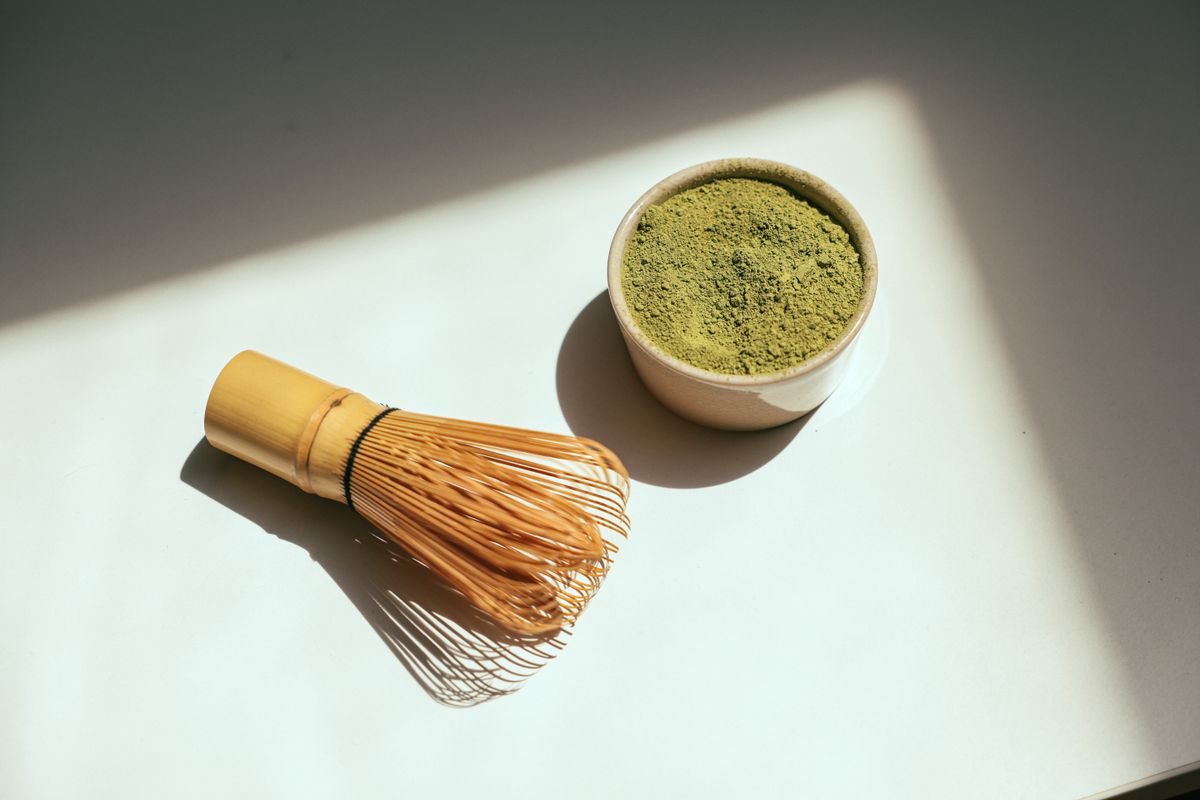
There's a reason a small scoop of bright green powder has quietly become part of so many morning routines. Matcha isn't just pretty — it's one of the most nutrient-dense ways to enjoy green tea, because you don't steep the leaves and throw them away. You whisk the whole leaf into your cup and drink all of it.
Here at Fu Matcha, our love for matcha started in a home kitchen, where customers kept telling us how good it made them feel. So let's talk honestly about what's actually happening in that cup — the real, science-backed benefits, without the hype.
1. A big dose of antioxidants (hello, EGCG)
Matcha is rich in a group of plant antioxidants called catechins — and the star of the show is EGCG (epigallocatechin gallate). Antioxidants help your body neutralize free radicals, the unstable molecules linked to everyday cellular stress. Because matcha is the powdered whole leaf, a single cup delivers noticeably more catechins than a cup of ordinary steeped green tea.
2. Calm, focused energy — without the jitters
This is the one people fall in love with. Matcha naturally contains L-theanine, an amino acid that promotes a state of relaxed alertness. When L-theanine works alongside matcha's caffeine, the result is a smoother, steadier kind of focus — energy that ramps up gently and lasts, instead of a spike followed by a crash.
"It's the only 'caffeine' that makes me feel calm and switched-on at the same time." — a feeling almost every matcha drinker describes.
3. Steady energy, gentler on your afternoon
A typical cup of matcha has around 60–70 mg of caffeine — less than a cup of drip coffee (about 95 mg). Combined with L-theanine, that caffeine tends to release more evenly. Many people find they can enjoy matcha later in the day without the wired, restless feeling coffee can bring.
4. Whole-leaf nutrition
Traditional green tea is steeped and strained, so you only get what dissolves into the water. With matcha, the leaf is the drink. That means more of its natural compounds — catechins, chlorophyll (the source of that gorgeous green), and a little fiber — end up in your cup rather than in the trash.
Why "ceremonial grade" matters for taste
Higher-grade matcha, made from young, shade-grown leaves and stone-milled slowly, is naturally sweeter and smoother — so you're more likely to enjoy it without piling on sugar. Our Uji Matcha Latte starts from exactly this kind of premium, shade-grown Uji matcha — smooth and naturally sweet.
5. Supports a healthy metabolism
Some studies suggest the catechins in green tea may give a modest, temporary nudge to metabolism, especially when paired with movement. Matcha isn't a magic weight-loss trick — but as a low-calorie, unsweetened swap for sugary drinks, it's an easy upgrade to a balanced routine.
6. May support heart health
Research on green tea has long associated regular drinking with better cardiovascular markers. Since matcha is concentrated green tea, choosing an unsweetened cup a day is a simple, pleasant habit to fold into a heart-friendly lifestyle.
7. A ritual that's genuinely good for your mind
Not every benefit shows up on a lab report. The two-minute ritual of sifting, whisking, and watching the foam rise is a small, grounding pause in a busy day. In a world of grab-and-go everything, that little moment of calm is its own kind of wellness.
How much matcha is a good amount?
For most healthy adults, 1–2 cups a day is a comfortable, enjoyable amount. If you're sensitive to caffeine, pregnant, or managing a health condition, keep an eye on your total daily caffeine and check with your doctor.
Is matcha good for you?
Yes — because you drink the whole ground leaf, matcha delivers concentrated antioxidants (catechins like EGCG), plus L-theanine for calm focus and moderate caffeine for steady energy.
How much caffeine is in matcha?
Roughly 60–70 mg per cup, less than drip coffee. Thanks to L-theanine, it usually feels smoother and longer-lasting.
Does matcha have more antioxidants than regular green tea?
Generally yes. Steeped green tea leaves are discarded; with matcha you consume the entire powdered leaf, so more of its catechins and chlorophyll make it into your cup.
This article is for general information only and isn't medical advice. Matcha contains caffeine. If you're pregnant, nursing, or have a health condition, talk with a healthcare professional about what's right for you.